Review: Colorful Embroidery on Black Fabric Back
As a designer who has spent years digitizing patterns and testing them on everything from flimsy rayon to heavy denim, I approach every new Colorful Embroidery on Black Fabric Back asset with a mix of curiosity and skepticism. We have all been there: you find a stunning graphic online, download it, and assume it will translate perfectly to thread. But embroidery is not printing. It has texture, tension, and physical limitations. When I first pulled up this high-resolution JPG, my immediate thought was not just about how pretty it looked on screen, but how those vibrant hues would behave against the unforgiving nature of black fabric.
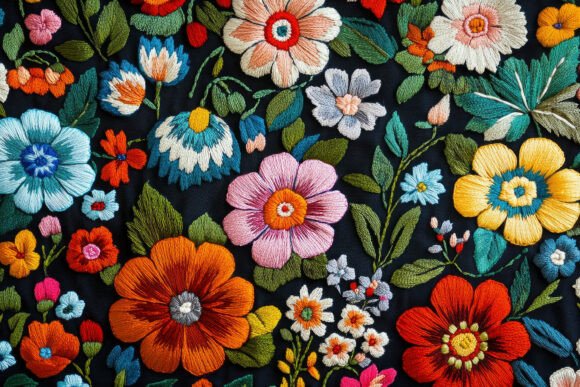
The visual impact of this design is undeniable. The contrast between the colorful elements and the dark background creates a mood that is both modern and bold. For an Etsy seller or a craft business owner, this kind of visual pop is gold. It stops the scroll. However, my job is to look past the initial aesthetic appeal and determine if this Graphics file holds up under the needle. Let’s break down how this design performs in real-world scenarios, from custom apparel to boutique home decor.
First Impressions and Visual Personality
The first thing that strikes me about Colorful Embroidery on Black Fabric Back is its layout. It feels balanced, with a central focus that draws the eye without overwhelming the surrounding space. This is crucial for embroidery projects where hoop size is limited. If you are working with a standard 4x4 or 5x7 hoop, you need a design that maintains its integrity when scaled down. The detail level here seems moderate, which is a good sign. Overly intricate details often get lost in translation, especially when using fill stitch techniques on textured materials.
The color palette is where this design truly shines. Using bright, saturated colors against a black backdrop is a classic technique to create depth. In a digital printable mockup, this looks crisp. But in reality, thread behaves differently than pixels. Light reflects off satin stitches, creating highlights that can either enhance the design or create unwanted glare. I suspect this design would benefit from a mix of satin stitch for borders and fill stitch for larger areas, ensuring the colors remain vibrant without becoming too dense.
Real-World Application: From Tote Bags to Sweatshirts
Let’s imagine a practical scenario. You run a small shop selling personalized gifts. A customer orders a custom tote bag design for a friend’s birthday. They want something unique, not the usual monogram. This is where Colorful Embroidery on Black Fabric Back could be a game-changer. Imagine this design stitched onto a heavy canvas tote. The black fabric of the bag serves as the background, allowing the colorful threads to pop. The durability of the stitch work would add value to the handmade product, making it feel premium rather than mass-produced.
Another excellent application is sweatshirt embroidery. Black hoodies are a staple in any wardrobe, but they can look plain. Adding this colorful design to the chest or back of a hoodie transforms it into a statement piece. However, you must consider the fabric texture. Fleece and cotton blends have a nap that can swallow small details. Before committing to a final product, I always recommend testing the design on scrap fabric. Check how the thread colors interact with the black base. Do they stand out? Or do they get muddy?
For baby embroidery projects, caution is key. While the design is beautiful, ensure that the stitch density is not too high. Babies have sensitive skin, and a dense patch of embroidery on a onesie can feel stiff and uncomfortable. If you use this for infant items, consider placing it on a softer, lighter-weight fabric or using it as an applique design to reduce the amount of direct stitching on the garment.
Navigating Technical Challenges
While the aesthetic is strong, there are technical hurdles to consider. The product description notes that this is a JPG file, sized 5824 x 3264 px. This is important. As an experienced reviewer, I must clarify that a JPG is a raster image, not a native machine embroidery design file like PES or DST. This means you cannot simply load it into your embroidery machine. You will need to use digitizing software to convert this graphic into stitches, or hire a digitizer.
This conversion process is where many beginners stumble. When converting a Backgrounds image to embroidery, you must manually assign stitch types. Will you use running stitch for fine lines? How will you handle the transitions between colors? If you are not experienced in digitizing, this step requires patience. You must check the stitch density carefully. Too dense, and the fabric will pucker; too loose, and the black background will show through the colors, ruining the effect.
Furthermore, consider the hoop size. If you plan to use this on curved surfaces like caps or hats, the design needs to be simplified. Complex curves can distort during stitching. For embroidered patch creation, this design could work well if you use a cut-away stabilizer to maintain shape. Always test on similar fabrics to your final product. A design that looks perfect on cotton might pull and distort on stretchy jersey knits.
Enhancing Brand Value and Customer Trust
From a business perspective, using high-quality visuals like Colorful Embroidery on Black Fabric Back can elevate your brand. When customers see a well-executed, colorful design on a dark garment, they perceive higher quality. It suggests attention to detail and professionalism. This is vital for commercial embroidery projects where you are competing with big-box retailers.
Use this design in your marketing materials. Create digital embroidery file previews that show the design on various products. Show it on a pillow cover, a kitchen towel, or a holiday gift item. This helps customers visualize the end result. Remember, transparency builds trust. If you are selling the finished item, be clear about the care instructions. Embroidery on black fabric can sometimes show lint or wear over time, so advising customers on proper washing methods adds to your credibility as a seller.
Practical Designer Notes for Success
Before you start stitching, keep these tips in mind:
- Test on Scrap Fabric: Never skip this step. Use the same type of black fabric you intend to sell. Check for puckering and thread breaks.
- Check Thread Contrast: Ensure your thread colors are vibrant enough to stand out against the black. Neon or metallic threads can add an extra layer of interest.
- Review Stitch Density: If digitizing yourself, keep the density moderate. Black fabric shows holes if the stitching is too sparse, but puckers if it is too dense.
- Use Proper Stabilizer: For black fabrics, a cut-away stabilizer is often best for durability, especially on garments that will be washed frequently.
- Confirm Licensing: Since this is a JPG graphic, ensure you have the right to use it for commercial purposes if you are selling finished goods. The product description says "Print Ready," but verify if this extends to derivative works like embroidery.
- Mockup Testing: Create black and white mockups to check the contrast and layout before committing to color threads.
In conclusion, Colorful Embroidery on Black Fabric Back is a versatile and visually striking asset for any creative entrepreneur. It offers a bold aesthetic that works well for custom apparel, home decor, and personalized gifts. However, its success depends entirely on your technical execution. Treat it not just as a pretty picture, but as a blueprint for a tactile, physical product. With careful planning, proper digitizing, and thorough testing, this design can become a standout piece in your portfolio, delighting customers and boosting your sales. Happy stitching!